Now in 2023, there are two dengue vaccines currently available in Thailand. The first one, known as Dengvaxia® was licensed in 2017 and the new one called Qdenga® was just available this year (2023). So there are many questions about dengue vaccine asked in our travel clinic including our online channels. The most common question are should I get vaccine or not and what is our recommendation regarding dengue vaccine.
In fact, to answer this question is not easy as it seems.
For those who prefer a quick answer without any detail. Our answer is no. We DO NOT recommend the use of dengue vaccine in travelers (from non-dengue area) visiting Thailand. For those who live/work in Thailand (the expat), generally speaking we also do not recommend. However it can be considered as an option for some expats.
What is the reason behind? Why don’t we recommend to use in travelers? We will try to answer and explain as simple as possible. However, some basic knowledge is required in order to understand. It is recommended to read these articles first if you haven’t already.
- Useful information about dengue infection for travelers
- Risk of dengue infection among travelers in Southeast Asia
- “I have been diagnosed with Dengue fever. What should I do? Should I worry?”
Here are some important information about dengue infection and dengue vaccine:
1. Dengue virus that cause dengue infection has 4 different serotypes namely Dengue 1,2,3,4 (DEN1, DEN2, DEN3, DEN4). If you get infected with DEN1, you will have life-long immunity against DEN1. However, you may have a chance to get DEN2, 3, 4 later in your life.
2. Scientists believe when people get primary (1st time) infection with dengue virus, the disease is usually mild and self limited. However, if that patient get dengue infection again (secondary infection), there is an increase risk to develop more severe disease. However, it doesn’t mean that all patients with secondary dengue infection will be severe. In fact, the majority of the cases is still mild, but chance to develop severe disease is higher than primary infection.
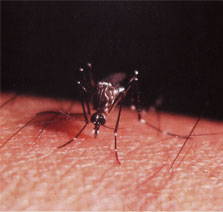 Ades mosquito that transmitted dengue virus
3. So ideal dengue vaccine should create life long immunity against all four serotypes of dengue virus. If we have that kind of vaccine, that’s fantastic. Unfortunately, we do not live in an ideal world.
4. The first available vaccine was licensed in 2017, which is Dengvaxia®. It is a live attenuated dengue vaccine contains all four serotypes of dengue virus. In term of safety, it is excellent. There is no safety concern of this vaccine i.e. the side effect is usually mild, no serious side-effect ever reported from the vaccine. However given dengue vaccine is a lived vaccine; it is contraindicated to use in certain persons such as pregnant/breast feeding woman, immunocompromised person, people who use corticosteroid, who has cancer.
5. However, when talking about the efficacy of Dengvaxia®, it is not excellent. The overall efficacy of vaccine against all serotypes of dengue virus was around 65%. That means even you get the vaccine you still have a chance to get dengue infection, it could actually reduce to risk approximately 65% When researchers looked into detail, they found that the efficacy against DEN3, DEN4 was very good when compared to dengue DEN1, DEN2
6. Dengvaxia® has a major limitation i.e. it should not be used in people who have never had a dengue infection before. Since there was a research show that the group of children who have never got dengue before will get less benefit to the vaccine and may have more chance to develop severe disease.
7. So Dengvaxia® can be use for people who had experienced dengue infection.
So let’s discuss about NEW dengue vaccine in Thailand
FAQ about dengue vaccine (QDENGA®)
1. What is QDENGA® and which countries have licensed this vaccine?
- Qdenga® is live attenuated tetravalent dengue vaccine. Meaning it contains 4 serotypes of dengue virus, serotypes 1,2,3 and 4, with live attenuated (weakened) serotype 2 as a backbone.
- Qedenga® is registered in Thailand, Indonesia, Brazil, Argentina, UK, and European Union.
2. What is the indication of dengue vaccine?
- Person aged between 4-60 years who lived in dengue risk area.
- However, in some countries such as in Indonesia only given for people aged 6-45 years old.
- No contraindication of vaccine i.e. no allergy, not pregnant, not breast-feeding, not immunocompromised, has no cancer, etc.
- There is no recommendation to use in travelers.
3. What is the efficacy of Qdenga®?
- Efficacy to prevent dengue infection is around 80%. And its efficacy to prevent hospitalization due to dengue is around 90.4%.
- After 4.5 years, proven to be 59% effective in preventing dengue fever and 84% in preventing hospitalization.
4. As a traveler to Thailand, should I get Qdenga® vaccine?
- Qdenga®, practically, is licensed to use in local people living in endemic area. But for travelers, there is no recommendation to use dengue vaccine in this group. There are many factors to concern especially the risk and benefit of the vaccine.
- It is recommended to discuss with the doctor to learn more about benefit-cost-risk to get the vaccine.
- Such as Mr. A would like to travel in Southeast Asia for 6 months, what is his chance to get dengue infection? Let assume that he has 6% chance to get dengue during his trip. Is it high or is it low? Is this risk acceptable or not? So it depends on Mr. A’s perception. He might say that it is high enough to get new dengue vaccine, while Mr. B might say that, 6% for him is a low risk. That’s ok.
- Another factor is efficacy of vaccine. Is 80% efficacy is good enough? Again it depends, Mr P may think that it is not good since the efficacy is not 90+%. While Mr. Q may think that 80% protection rate is good enough and dengue infection is potentially fatal, and he hates dengue, so he wants to get vaccine. Both perspectives are fine.
- It is important to note that Qdenga® is a very new vaccine, so there is very limited data on the long term safety especially in larger population. This factor should be weight with the benefit of the vaccine as well.
- So it is always recommended to discuss with the doctor.
- No matter you should to get dengue vaccine or not, it is recommended to prevent yourself against mosquito bite. Whenever you have high fever or suspected dengue infection, you need to see a doctor.
6. How long will Qdenga®? protect me?
- There are not enough scientific information to answer this question. Study showed that, after 4.5 years, Qdenga® proven to be 59% effective in preventing dengue fever and 84% in preventing hospitalization.
- But at 10, 15 years post vaccination, will volunteer still be protected against dengue or not? Unfortunately, at this point, no one knows the real answer, we need to wait for more information/research.
7. What is the cost of Qdenga®, and how many shots do need to get ?
- In our hospital, it is approx. 1,639 baht per dose.
- You need to get two doses of vaccine on Day 0 and 3rd month.
- In our hospital, all travelers must consult with our doctor in order to get the vaccine prescription
- It is recommended to make an appointment before visiting us.
REFERENCES:
- European Medicine Agency. Qdenga
- Takeda New Release 2022. https://www.takeda.com/newsroom/newsreleases/2022/takedas-qdenga-dengue-tetravalent-vaccine-live-attenuated-approved-for-use-in-european-union/
- Thai FDA. Qdenga product information
- Sanofi Pasteur. Sanofi updates information on dengue vaccine. http://mediaroom.sanofi.com/sanofi-updates-information-on-dengue-vaccine/ [Accessed 1 Dec 2017]